There are places you visit, and there are places that visit you back. Nathu La Pass is firmly the second kind.
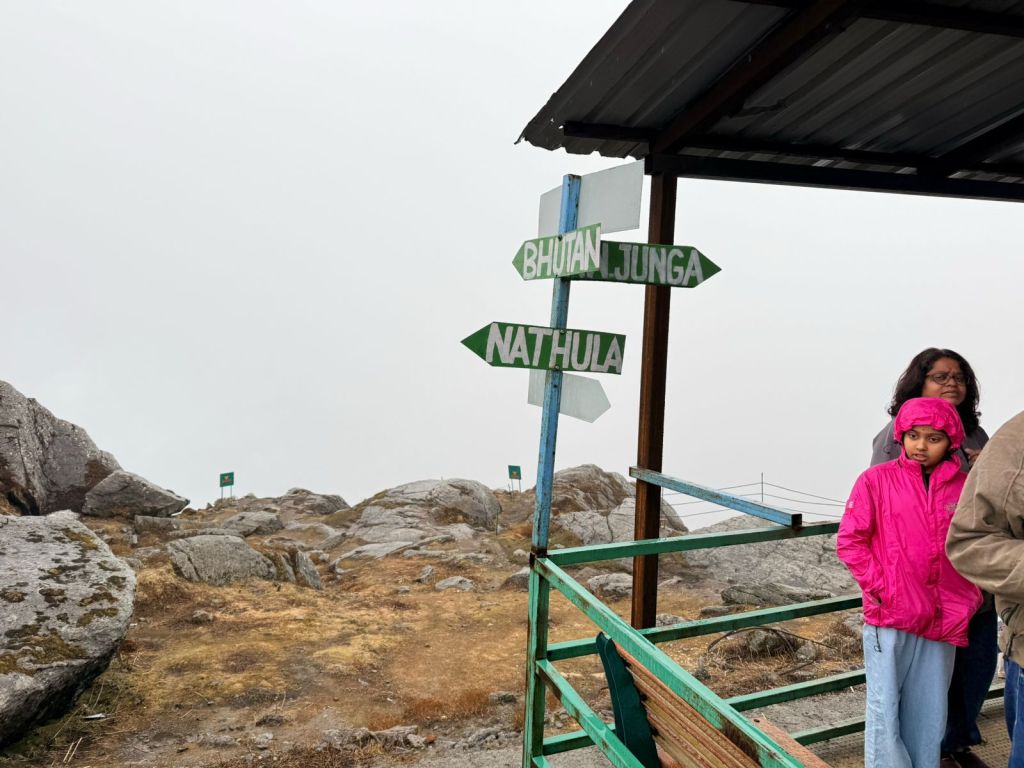
Standing at 14,000 feet on the India–China frontier in the northeastern Indian state of Sikkim, the air is thin enough to make your lungs work for every breath, and the wind bites with the kind of cold that finds its way through every layer. Yet none of that is what stops you. What stops you, mid-sentence, mid-thought, mid-step is the overwhelming, almost physical sensation that you are standing inside history itself.
A Road That Has Seen Everything
Nathu La Pass sits on one of the highest motorable roads in the world, a narrow ribbon of altitude tracing the ancient boundary between India and Tibet, with China beyond it. Long before it was a military frontier, it was a lifeline. For centuries, this ridge formed a critical artery of the Silk Road. a living corridor through which merchants carried wool, silk, and spices between the Indian subcontinent and the Tibetan plateau, their caravans threading through the cold in a slow, determined procession of commerce and culture.
Then came the wars. The pass was sealed shut following the Sino-Indian War of 1962, and erupted again as a violent flashpoint in 1967. For decades it sat closed a wound in the landscape, a gap in trade, a ghost of what it had once been. It was only in 2006 that Nathu La officially reopened as a trade point, and only under careful, controlled conditions that ordinary visitors like me are permitted to stand on this ridge today.
When you know all of this, the ground beneath your feet feels different. Heavier. More alive.
Tsomgo Lake: Where Stillness Has a Name
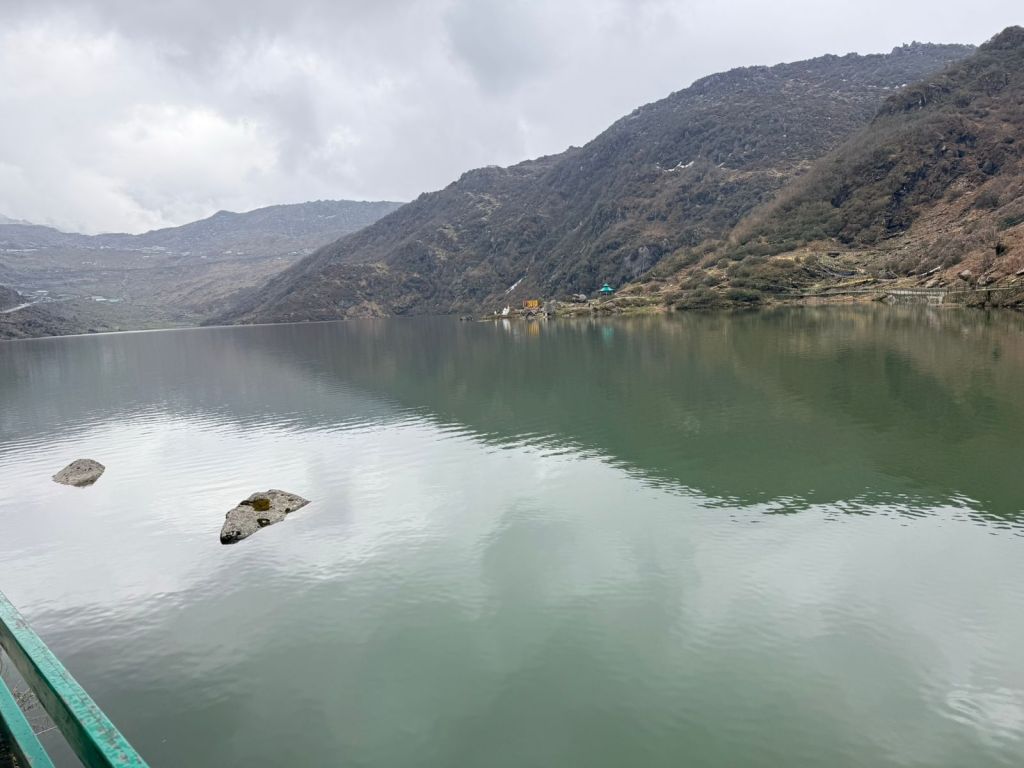
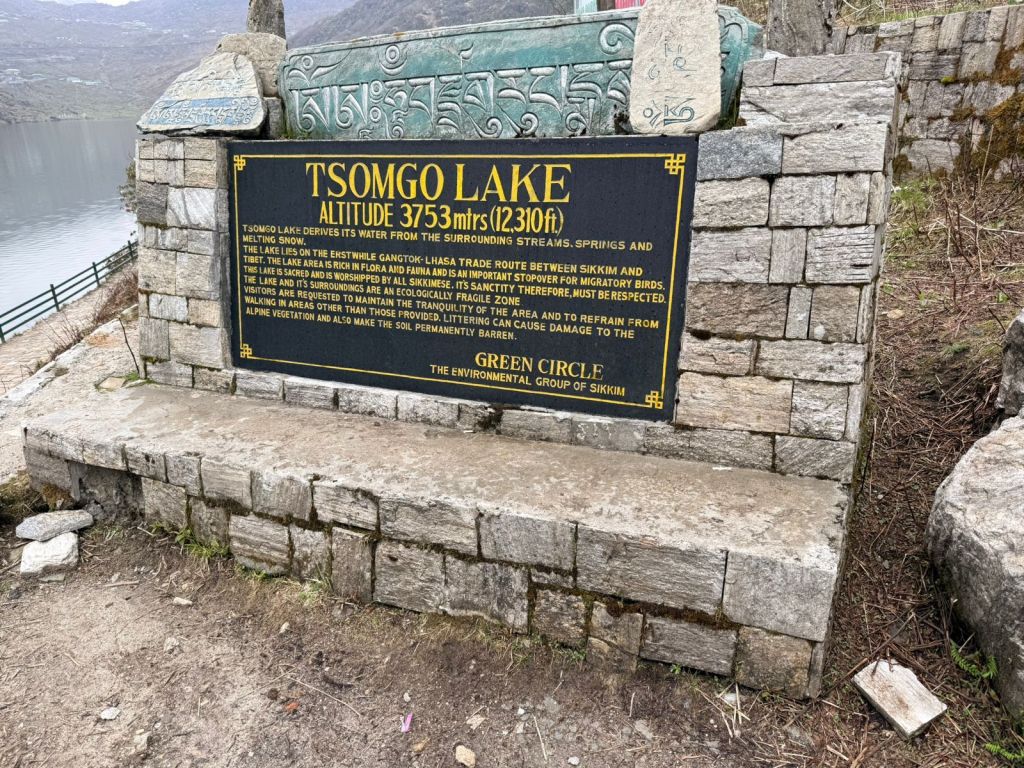
The journey to Nathu La begins lower, at Tsomgo Lake also known as Changu Lake resting at 12,310 feet, roughly 40 kilometres from the Sikkimese capital of Gangtok. The name Tsomgo comes from the Bhutia language and means simply “source of the lake,” a beautifully plain description for something that is anything but plain.
In winter, the lake freezes entirely, a sheet of white silence in a bowl of mountains. By spring, as the ice retreats, it thaws into a deep, shifting blue-green that mirrors the sky with almost unsettling clarity. Local communities have long held the lake sacred, and standing at its edge, it is remarkably easy to understand why. There is a stillness here that doesn’t feel empty it feels inhabited, ancient, and deeply calm.
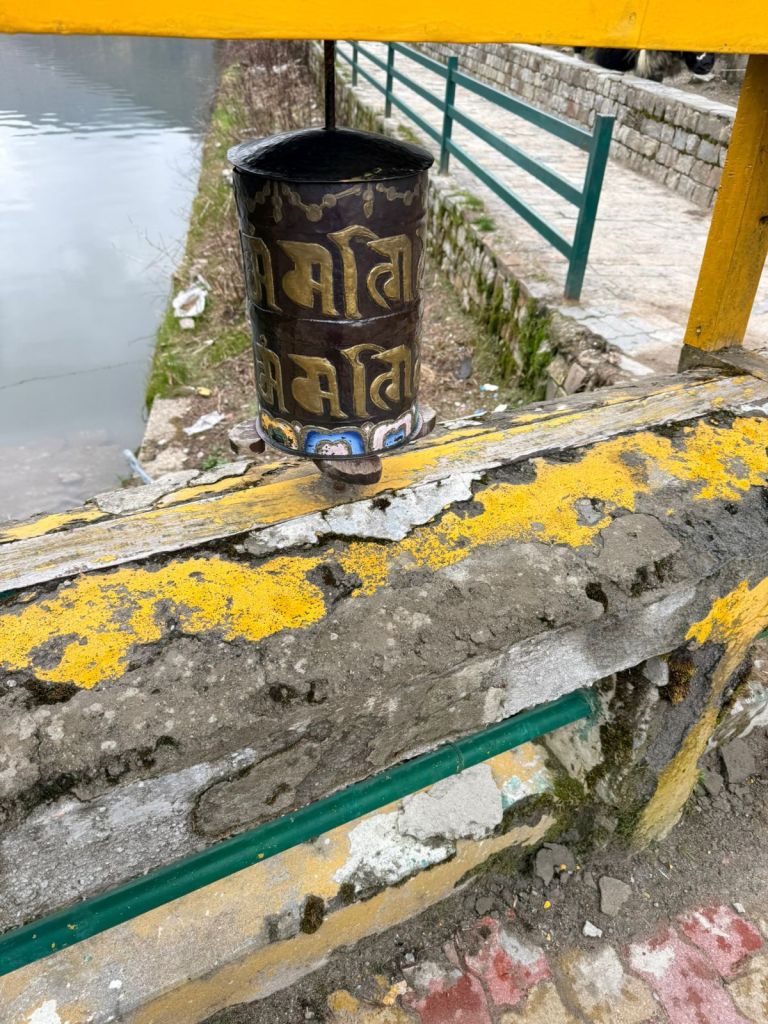
I spun a weathered prayer wheel at the lakeside and let the moment settle into me. It was the kind of quiet that you carry with you long after you’ve left.
The Yaks, the Memorial, and the Mountain
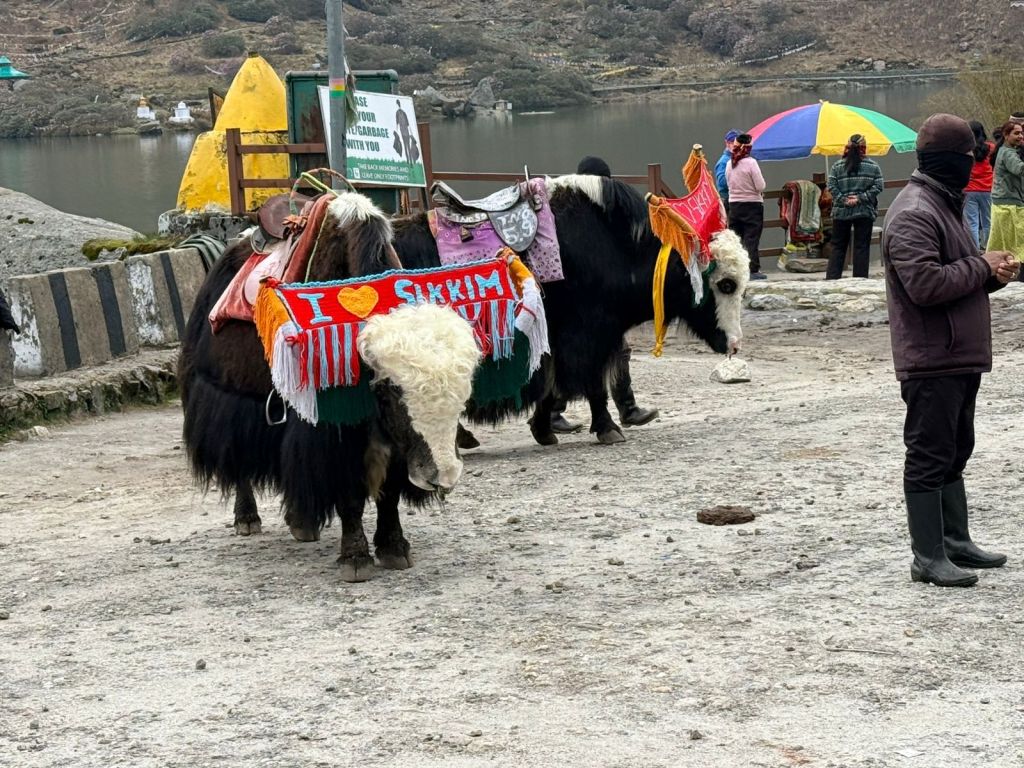
Higher up, closer to the pass itself, life asserts itself in unexpected ways. The yaks are impossible to miss enormous, shaggy, and entirely untroubled by the altitude that has the rest of us breathing carefully. One wore a bright blanket emblazoned with “I ❤️ Sikkim,” its handler standing patiently nearby in the biting cold, as though this were the most ordinary morning in the world. There is something deeply grounding about that image the ancient and the endearing, side by side on the roof of the world.
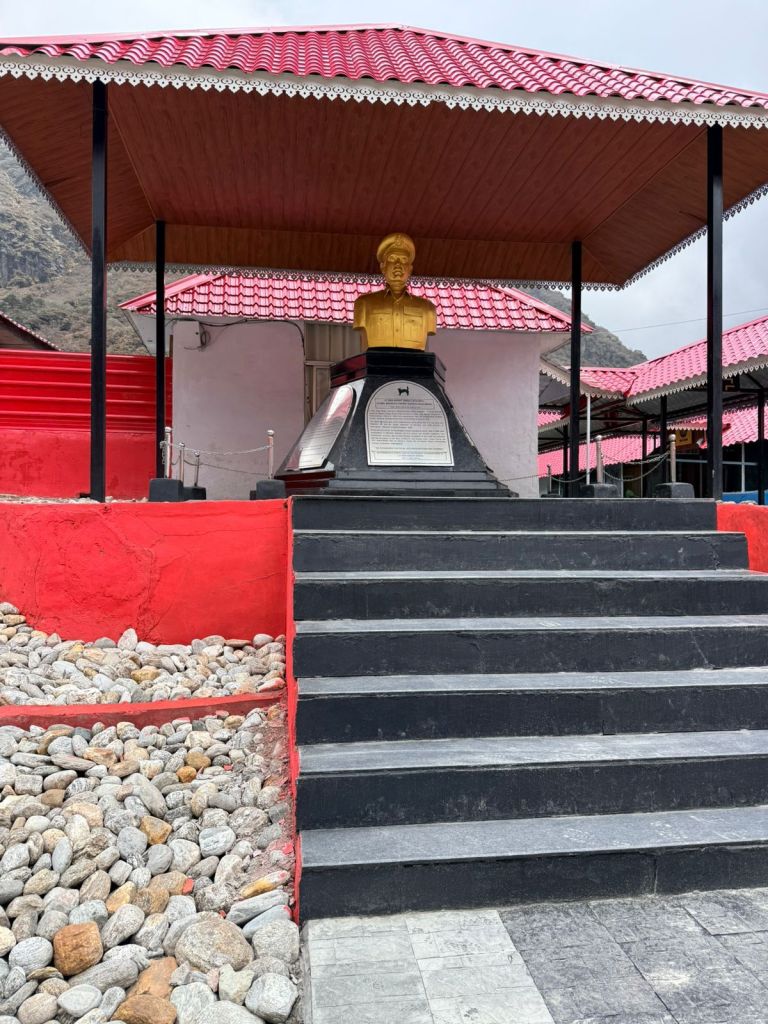
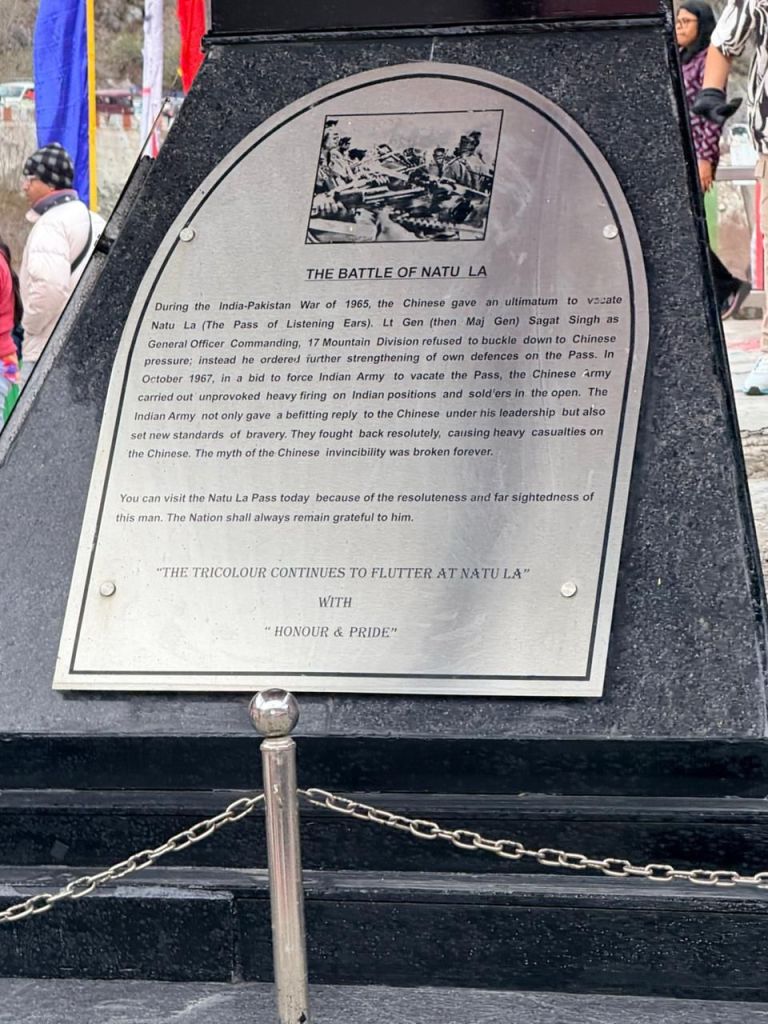
Nearby stands the Battle of Nathu La memorial, a sober and quietly powerful reminder of the 1967 conflict in which Indian soldiers defended this very ground. Reading the inscriptions, a particular thought settles in with some weight: the only reason any of us can stand here today, cameras in hand, is because others once stood here under very different circumstances and held the line. It is a debt that is easy to forget until you are standing in the exact place where it was paid.
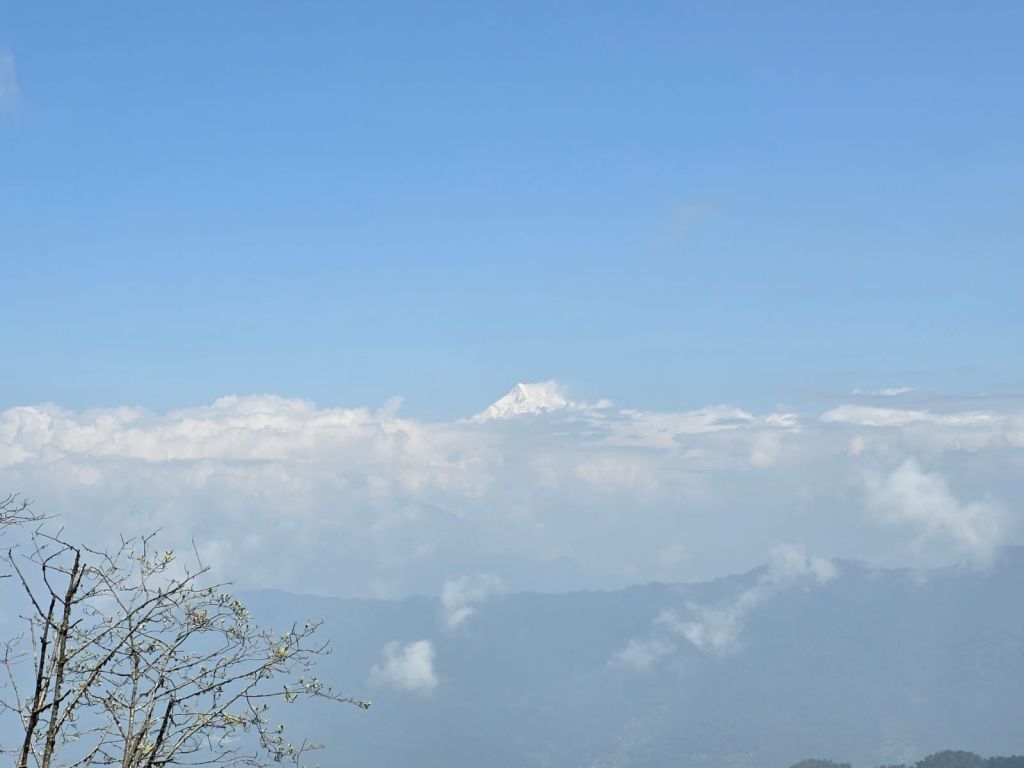
And then, breaking through the clouds as if on cue Kanchenjunga. At 28,169 feet, the world’s third-highest peak is a presence rather than merely a sight. Most days it hides behind cloud and weather. To catch it clearly, even briefly, feels like a privilege, like being winked at by something vast and indifferent and magnificent.
Baba Harbhajan Singh: The Soldier Who Never Left
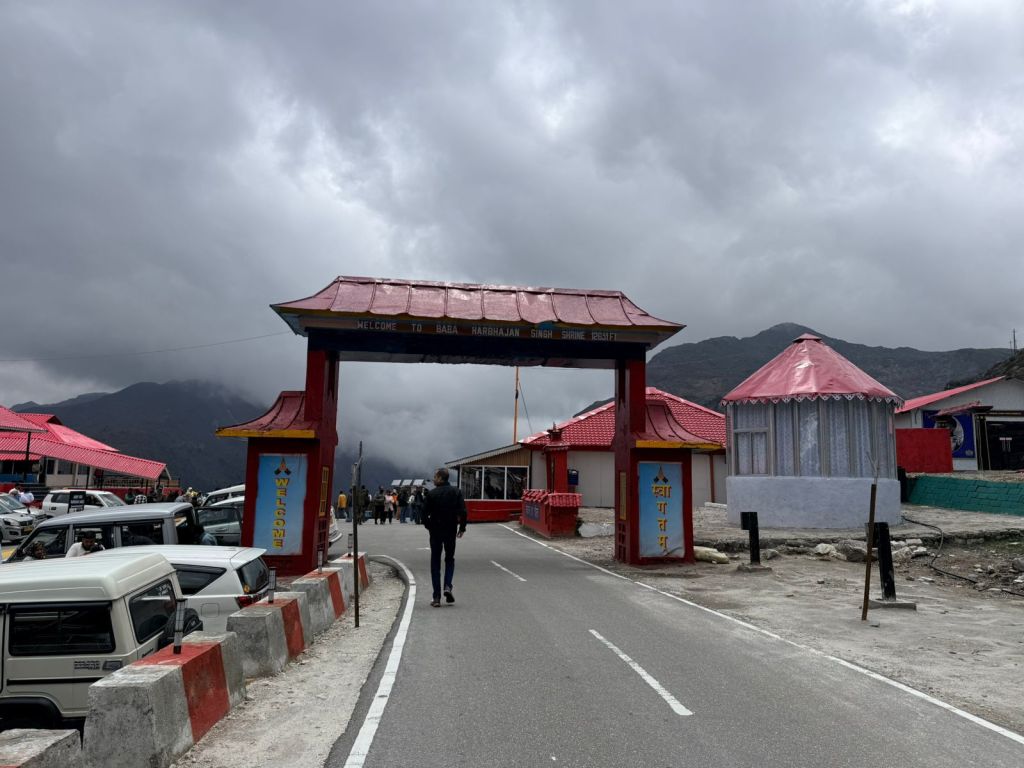
Perhaps the most quietly extraordinary stop on this journey is Baba Harbhajan Singh Mandir, a shrine situated in eastern Sikkim at an elevation of 13,123 feet, roughly 52 kilometres from Gangtok.
The man it honours known simply as “Baba” was an Indian Army soldier who died in 1968. His body was recovered from a glacial stream, and according to accounts passed down through the decades, he appeared to a fellow soldier in a dream and requested that a memorial be built in his honour. The army obliged.
What makes the shrine remarkable is not the building itself, but the belief that surrounds it. Baba Harbhajan Singh’s personal effects his uniform, his shoes, his bed are preserved inside as though he has merely stepped out and will return shortly. And in a sense, the story goes, he does. Each morning, it is said, his shoes are found muddy. Each night, local belief holds, he still patrols the border he died defending.
The Indian Army takes this seriously. Soldiers speak of him not as a legend but as a colleague. Standing in the mandir, surrounded by the quiet conviction of those around me, the rational and the spiritual seemed to briefly negotiate a truce. In that moment, I believed it too.
The Flags That Fade but Never Fall
Threading through the entire journey are the prayer flags thousands of them, strung across mountain passes, temple entrances, and open sky alike. I had always seen them as decoration. Nathu La corrected that assumption.
The colorful horizontal flags are called Lung ta, which translates as “wind horse.” They are flags for the living, carrying prayers and blessings outward on the breath of the wind, releasing good fortune into the world with every flutter. The tall white flags are Dar cho, and these are for the dead raised in honor of those who have passed, left to stand until the wind and weather claim them.
Neither kind is ever taken down. They are simply left to fade slowly, gracefully, over months and years until they become translucent threads in the mountain air. The fading is not neglect. It is the point. Life and death, the flags suggest, are not opposites but parts of the same unbroken cycle. The wind carries both.
What Lingers
There is a particular kind of travel that does something to your understanding of time. Most days, history is something you read about. At Nathu La, it is something you stand inside. The same ridge that guided spice merchants and silk traders for centuries is the ridge where soldiers fought and died, where a ghost soldier still patrols in local belief, where a frozen lake thaws every spring into something sacred, where prayer flags release the names of the dead into thin mountain air.
Some places give you views. Nathu La gives you perspective.
Ever been somewhere that made history feel physically present? The kind of place that stays in your chest long after you’ve come back down to sea level? I’d love to hear about it.
Sikkim #NathuLa #ChanguLake #Himalayas #Travel #India #TravelStories #Northeast
🌐 Website: echosofmymind.com
📺 YouTube: @EchosOfMyMind
📘 Facebook: Echos Of My Mind
💼 LinkedIn: Echos Of My Mind
 Echos Of My Mind
Leave a comment